


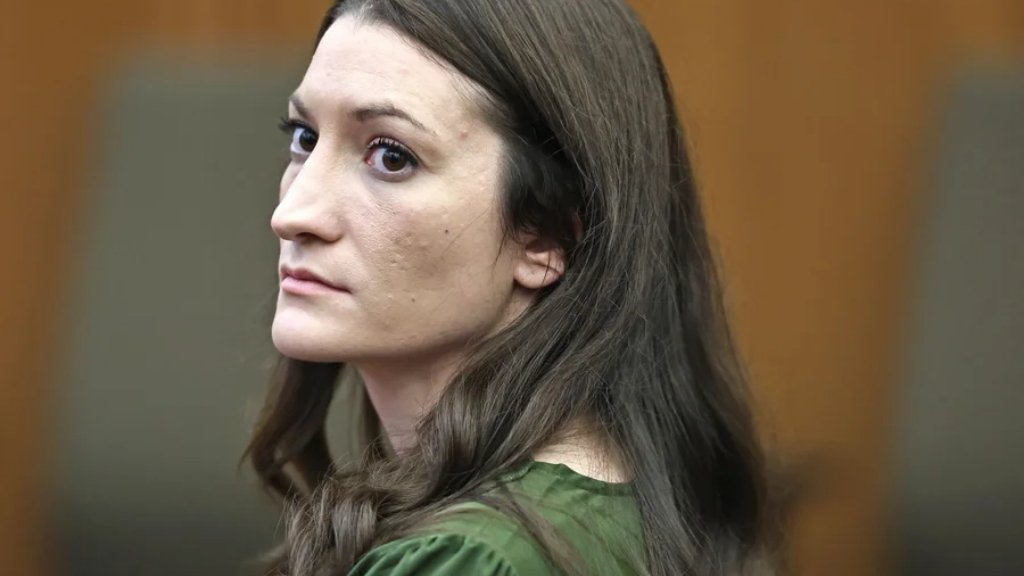
Jurors weighing the case against Lindsay Clancy told the judge Tuesday morning that they had reached an impasse, but were instructed to continue discussing the verdict.
The jury in the Lindsay Clancy murder trial has not yet reached a unanimous verdict after nearly 18 hours of deliberations.
Jurors sent a note to Judge William Sullivan at around 10 a.m. Tuesday, informing him that they were unable to agree on a decision after spending hours reviewing the evidence and testimony presented during the lengthy trial.
The note indicated that the jury had reached a standstill.
After briefly speaking with prosecutors and defense attorneys, Judge Sullivan brought the jurors into the courtroom. He acknowledged the considerable amount of evidence they had been asked to consider, including testimony from more than 80 witnesses and more than 300 exhibits.
Sullivan then directed the jurors to return to the deliberation room and continue their discussions, reminding them to follow the legal instructions they had previously received.
Jury Could Face Further Instructions if Deadlock Continues
If the jurors remain unable to reach an agreement, the judge could eventually issue what is known in Massachusetts as a Tuey-Rodriguez instruction, sometimes referred to as a “dynamite charge.”
The instruction is intended to encourage jurors to reconsider their positions and continue working toward a unanimous decision. Among other points, it tells jurors that there is no reason to assume a different jury would be better equipped to decide the case or that a future trial would necessarily produce clearer evidence.
For now, however, deliberations are continuing.
Clancy Faces Three First-Degree Murder Charges
Clancy, 36, is facing three counts of first-degree murder in connection with the deaths of her three children at the family home in Duxbury on Jan. 24, 2023.
The victims were identified as 5-year-old Cora, 3-year-old Dawson, and 8-month-old Callan.
Clancy has not disputed that she killed the children. Instead, her defense has centered on her mental state at the time of the killings.
Her attorneys have argued that she was experiencing severe postpartum mental illness, including postpartum psychosis, and therefore should not be considered criminally responsible for her actions.
Defense attorney Kevin Reddington has maintained that Clancy heard a voice telling her to kill her children and then take her own life. Following the killings, Clancy attempted suicide and survived but was left paralyzed.
During closing arguments, Reddington argued that Clancy’s mental deterioration was connected to the medication and medical treatment she received after the birth of her third child in 2022.
Prosecutors Dispute Insanity Defense
Prosecutors have acknowledged that Clancy was struggling with depression and suicidal thoughts before the killings. However, they have challenged the defense’s description of her mental condition.
The prosecution has disputed claims that Clancy experienced auditory hallucinations and argued that she understood the difference between right and wrong.
Assistant District Attorney Jennifer Sprague told jurors that Clancy viewed her children as an obstacle preventing her from ending her own suffering. According to the prosecution’s theory, killing the children was a decision she made as part of a plan to end her misery.
The competing arguments over Clancy’s mental state have been central to the trial.
Defense Criticizes Media Coverage
The case has also generated significant attention outside the courtroom.
On Monday, Reddington criticized legal commentator Nancy Grace and Fox News host Sean Hannity for remarks they made while discussing the case.
Reddington particularly objected to statements suggesting Clancy had searched online for ways to kill before the children’s deaths.
Investigators had previously alleged in court documents that Clancy used her phone and journal to record information about her mental health, feelings toward her children and medications, as well as researching methods of killing.
However, when portions of Clancy’s internet history were presented during the trial, Reddington argued that the searches appeared to be more closely associated with potential suicide methods.
Reddington also criticized Hannity and other commentators for publicly analyzing Clancy’s symptoms and medical history.
Hannity later responded, saying his program had repeatedly invited Reddington to participate in a discussion but had not received a response. He rejected the suggestion that his coverage was limited to criticism and pointed out that women had also appeared on his program to discuss the case.
What Could Happen Next?
The jury has several possible verdicts to consider.
Although Clancy faces first-degree murder charges, jurors can also consider lesser offenses, including second-degree murder and manslaughter, depending on their findings.
Another possibility involves the defense’s insanity argument. If jurors determine that Clancy was not criminally responsible because of mental illness, she could be found not guilty by reason of lack of criminal responsibility.
Such a verdict would not necessarily mean that Clancy would immediately return to the community.
Judge Sullivan previously explained that prosecutors can seek to have a person committed to a mental health facility following such a finding. A judge can order continued commitment when an individual remains mentally ill and is considered a danger to themselves or others. Those decisions can be reviewed periodically.
For now, the jury remains in deliberations, with the outcome of one of Massachusetts’ most closely watched murder trials still uncertain.